Why Is Battery Lifecycle Management Important for Manufacturers?

safekt
September 24, 2026
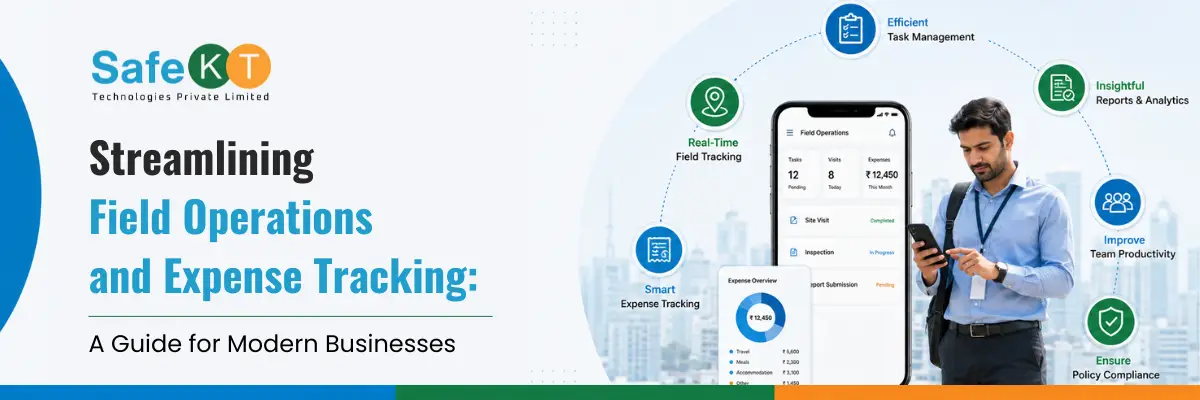
Picture a field executive wrapping up a long day of site visits. Fuel receipts are stuffed in a shirt pocket, attendance is marked on a phone call to the office at 9 am and the expense claim will probably sit in someone’s inbox for two weeks before anyone even looks at it. This is not a story about one careless employee. It’s how most growing businesses still run their field teams and it is costing them more than they realise.
Every business with people working outside a fixed office eventually runs into the same set of problems, that is attendance gets recorded on paper registers or informal messages, expense claims arrive as crumpled receipts, forwarded photos or numbers typed into an email weeks after the actual expense happened. Approvals depend on whichever manager happens to be free that day and if that manager is travelling too the whole process stalls.
Table of Contents
ToggleThis is what makes field operations management such a real and practical problem, simply not just a theoretical one. A field team spread across different locations needs a system that can keep up with them in real time not one that catches up on paperwork once a month. When there is no structure in place, the effects show up quietly at first, reimbursements get delayed and employees start wondering why something as simple as a travel claim takes three weeks to clear, this leads to things like attendance disputes coming up because there is no reliable record of who was where and when, as a result, the finance team end up spending hours reconciling numbers that should have taken minutes.
The scale of this problem is well documented. According to the GBTA Foundation a manual expense report costs businesses an average of 58 dollars to process and takes around 20 minutes of someone’s time and nearly one in five of those reports contains an error that needs correcting later, now multiply that across a growing field team, and the cost is not just financial. It is the hours your managers spend chasing paperwork instead of running operations, in simple words it is the time that your manager wastes handling papers when he was supposed to make business related decisions. So the real question worth asking is this. How much of your team’s time is going into administrative cleanup instead of actual fieldwork?
The shift away from manual processes usually starts with expense management because it is where most of the pain is visible, this is where automated expense tracking simply means an employee can log an expense the moment it happens attach a photo of the receipt and have it move straight into the approval chain without anyone reentering the same details by hand.
This changes corporate expense approval from a bottleneck into something closer to a formality instead of a claim sitting untouched until a manager finds time to review it, the system routes it automatically to the right person flags anything that looks unusual and keeps a clear timestamped record of every step, go back to that field executive from earlier, now imagine it with an automated workflow the fuel and travel claim gets photographed on site categorised instantly and approved the same day often before the employee has even left the location, result will be there is no waiting, no lost paperwork and no manager digging through old messages trying to remember what was agreed just a simple and reliable system that works for you and removes this hassle from the list. So just adding a simple automation can help you get free from the hassle.
There is a quieter benefit to this kind of automation too because every claim can be traced from the moment it is submitted to the moment it is approved there is simply less space for honest mistakes and for deliberate misreporting to slip through, most businesses do not think about this until it becomes a problem which brings up a bigger risk worth looking at more closely.
Attendance tends to be the second thing that falls apart once a team stops working out of one office field employee attendance tracking through digital attendance systems takes over from registers and morning phone calls using location tagged check ins that show exactly when and where someone’s day actually began.
This is not about keeping a closer eye on employees for the sake of it, rather, it is about giving managers something most of them simply do not have right now, a dependable, real time picture of where their people are. A supervisor handling staff across three or four sites should not have to call each location just to confirm the team has shown up. With a digital system, that detail is already sitting on a dashboard, timestamped and geo tagged ready for payroll or a performance conversation whenever it is needed. This helps you improve your overall working pipeline by many folds, as you only focus on important tasks and business related decisions.
There is a smaller but useful benefit here too, manual attendance tends to create friction that no one talks about openly, disagreements over hours worked or a late arrival often come down to whose memory is more convincing, once attendance is tracked digitally, that argument disappears on its own because the record already exists and that shift tends to work in everyone’s favour since the employee has proof of their hours and the manager finally has data they can actually rely on.
Once expense and attendance data starts flowing through one system a new question comes up naturally. Who actually gets to see all of it? This is where role based security controls and expense verification software become necessary rather than optional.
Not every person in a business needs access to every piece of financial information. A field employee should be able to submit a claim without seeing anyone else’s reimbursement history a manager should be able to approve claims from their own team without pulling up salary details from another department. Take a regional sales manager, for instance, they should be able to see and approve their own team’s travel claims but there is no real reason for them to view what someone in the operations team is spending, a finance head needs a wider view to verify and reconcile spending but even that access should be defined clearly rather than left open by default.
This kind of tiered access matters for a reason that goes beyond convenience. The Association of Certified Fraud Examiners found in its 2024 Report to the Nations that organisations typically lose around 5% of their annual revenue to occupational fraud and more than half of the cases studied were linked to weak or missing internal controls, role based access is one of the simplest ways to close that gap because it limits exposure without slowing anyone down. A finance head restricting visibility into salary and reimbursement data to only the relevant approvers isn’t being overly cautious it is basic financial hygiene that most businesses simply have not gotten around to setting up yet.
None of this works particularly well as three separate tools bolted together. The real benefit shows up when expense tracking, attendance, and approval workflows sit inside one connected system, often described as business management modules, where data moves between them automatically instead of being reconciled by hand at the end of each month.
This is where corporate spending management actually becomes manageable rather than a monthly scramble. When attendance data, expense claims, and approvals all live in the same place, a manager can see the full picture of a field team’s activity without switching between spreadsheets, WhatsApp messages, and email threads. It’s worth noting that this shift is already well underway across industries. The global field service management market was valued at around 6.1 billion dollars in 2025 according to Grand View Research, and it’s expected to keep growing at a double digit rate as more businesses move away from manual, disconnected processes.
A few practices tend to separate businesses that get real value from this shift and those that do not. Choose a system that connects attendance, expense and approvals rather than treating them as separate problems. Involve field staff early, since they are the ones who will actually be using it every day. Review where approvals tend to get stuck and adjust the workflow instead of assuming the delay is just how things work and revisit access permissions periodically as your team grows rather than setting them once and forgetting about them.
Once a business reaches this point, where the gaps are clear and the cost of leaving them unaddressed is obvious, the next step is usually building a system that ties everything together properly, this is where SafeKT works with growing businesses to set up field operations and expense management systems that fit how their teams actually work rather than forcing them into a rigid template. This helps many businesses that are in their early stages and want to install a system early on, so that they have a better control over things from the very beginning.
Scattered attendance registers and slow expense approvals rarely feel urgent until you add up what they are actually costing in time, money and trust between teams. The businesses that fix this early are not necessarily bigger or better resourced. They have simply stopped treating field operations as an afterthought and started treating it as a system worth designing properly.
If your field team’s attendance and expense processes still depend on spreadsheets, phone calls, and a fair amount of manual follow up, it may be worth having a conversation about what a more connected setup could look like. SafeKT can help you look at where the gaps are and build a practical way to close them.
Tags :
Get complete visibility across your battery lifecycle with smarter warranty management, automated claims, real-time tracking, and powerful business insights.

Copyright © 2026 All rights reserved.